
How fast can you deploy after a disaster in Wichita Falls?
Fast is relative, but our answer is measured in hours. A single delivery truck carries enough standard portable toilets and handwashing stations for a shelter or a distribution point, and we route from stock already sitting near Wichita Falls rather than ordering units in from another region. Pleasant Valley sits 7.5 miles northwest, Lakeside City 8.1 miles south, and Burkburnett 14.7 miles north; all of that is inside a short run for us, and it matters when a county judge or emergency manager needs restrooms at a shelter before the second wave of trucks arrives with cots and water.
Emergency response is different from a wedding order. There is no lead time, no walk-through, and often no paved pad to set units on. We ask for a flat, reasonably firm spot per ADA Standards section 302.1, which calls for stable, firm, slip-resistant ground, but in a disaster we work with what is there and adjust placement as conditions change. If you are coordinating a shelter, a distribution site, or a debris drop point, start with emergency porta potty rental and we will scope numbers by expected headcount using the same logic in our how many porta potties do I need guide.
What do you provide beyond toilets?
Sanitation after a disaster is more than toilets. We also run septic pumping service for homes on failed systems, roll-off dumpster rental for storm debris, and temporary fence rental around damaged structures or staging yards. A flooded or backed-up septic tank is one of the first calls we get after heavy rain; a typical residential tank is pumped every 3 to 5 years under normal use, and a storm that floods a drain field can force that timeline up fast. If a system is already failing, our septic tank warning signs page covers what to watch for, and emergency septic service covers what we do about it same-day.
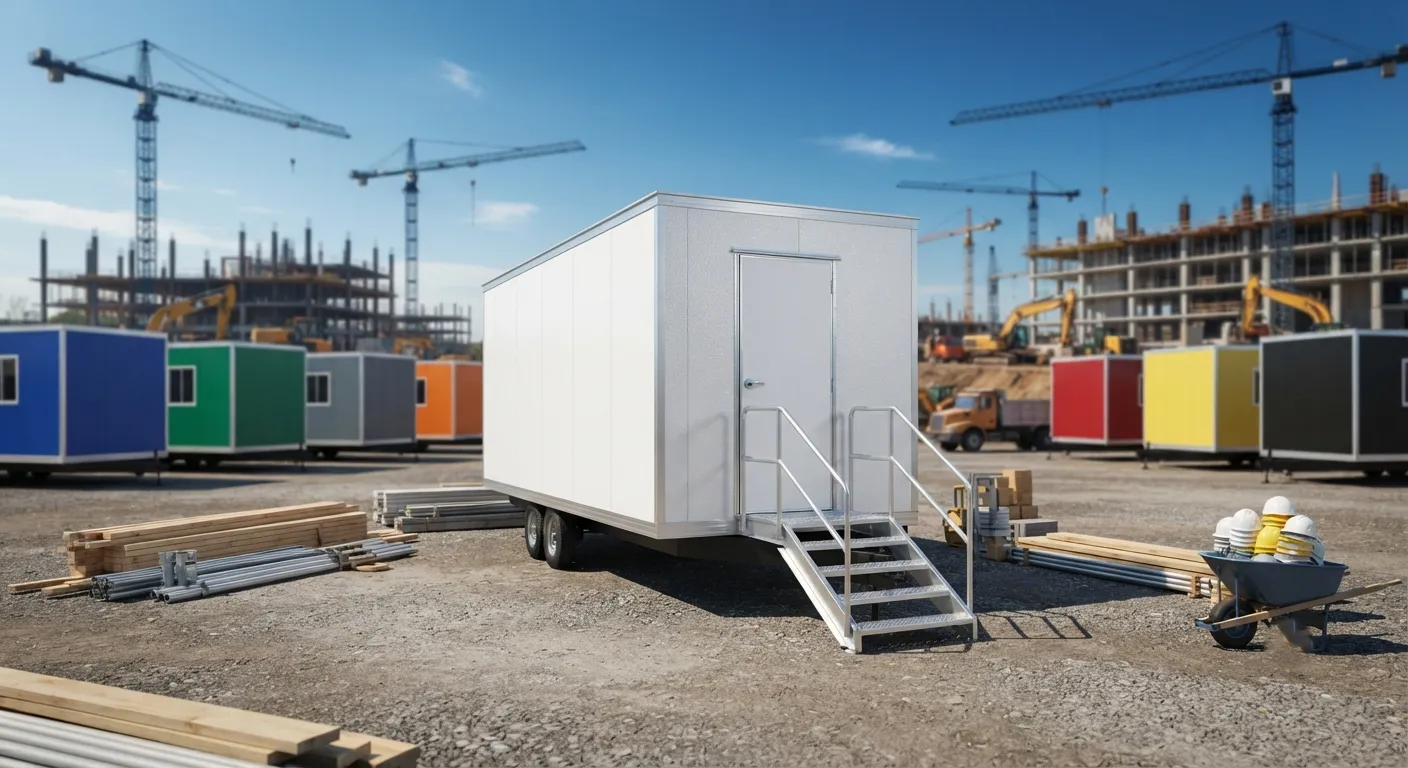
For debris, a 10 yard dumpster rental handles a single flooded garage cleanout, while a 20 yard dumpster rental or 30 yard dumpster rental suits a block-level cleanup. Know what cannot go in the box before you load it; wet drywall and certain chemicals need separate handling, covered on what cannot go in a dumpster. If a shelter or command post needs a place to store donated supplies, a storage container rental or mobile office trailer rental works better than a tent that can blow apart in follow-on wind.
What sanitation rules apply at a disaster site?
The rules do not disappear because it is an emergency. Where volunteer or paid crews are doing recovery work, OSHA 1926.51(c) still sets the baseline: one toilet facility for 20 workers or fewer, stepping up to one toilet and one urinal per 40 workers past that count, and per 50 once a crew tops 200. If crews are pressure-washing structures or applying disinfectants and coatings during cleanup, OSHA 1926.51(f)(1) requires washing facilities for that specific contaminant exposure, and 29 CFR 1910.141(d)(2) requires soap and towels or a hand-drying device at those stations, not sanitizer alone. We build those into every recovery site plan.
Accessibility does not get waived either. ADA Standards section 213.2 requires that where single-user toilets are clustered, at least 5 percent be wheelchair accessible, with a minimum of one unit regardless of cluster size, and our ADA accessible porta potty units meet the 60 inch turning circle called for in section 304.3.1. If your recovery operation involves agricultural land around Iowa Park or Holliday, field sanitation for hand-labor crews falls under OSHA 1928.110, which sets one facility per 20 workers within a quarter mile walk; our farm and agricultural restrooms page covers that setup. For general guidance on counts and layout, see OSHA portable toilet requirements and porta potty placement guide.
Pricing during a disaster follows standard rental bands; a standard unit runs 100 to 350 dollars a day depending on volume and urgency, and weekly rates run higher than daily, never lower. Full detail sits on our porta potty rental cost and porta potty rental per day pages.
| unit | day | week | month |
|---|---|---|---|
| standard | 100-350 | 130-500 | 125-325 |
| ada | 200-400 | 120-240 | - |
How many toilets does a shelter of 200 people need?
Base it on OSHA 1926.51(c) ratios adapted to shelter use: figure roughly one toilet per 20 to 40 people depending on how long they are staying, so a 200-person shelter typically needs 5 to 10 units plus at least one ADA-accessible unit under section 213.2.
Can you deliver before roads are fully cleared?
Often yes, if there is a passable route in. We coordinate with emergency management on access before dispatch, and a roll-off delivery still needs about 60 feet of straight clearance behind the truck, so tight or debris-blocked streets may require a smaller drop zone.
Do you provide handwashing separate from toilets?
Yes. Standalone portable sink rental and hand sanitizer station rental units are common at shelters and feeding sites, run alongside toilets rather than instead of them, since sanitizer alone does not meet 29 CFR 1910.141(d)(2).
What if the disaster damages a home septic system?
Call septic pumping service first. Flooding pushes solids into the drain field and can force pumping outside the normal 3 to 5 year cycle; a pumping visit during recovery runs 150 to 300 dollars in a single day.
Do you serve towns outside Wichita Falls during a regional disaster?
Yes. We regularly move units to Burkburnett, Iowa Park, Holliday, Lakeside City, and Pleasant Valley, all within about 15 miles of Wichita Falls, and our service areas page lists current coverage.
Next step
Get a delivery date
Tell us the address, the dates and the headcount. We size the order and confirm the route.