
Where should a porta potty go on a job site or in a yard?
Set the unit on ground that's flat and firm, ADA Standards section 302.1 calls for stable, firm, slip resistant surfaces, and that rule of thumb holds even where accessibility isn't required. Gravel, concrete, or packed dirt all work. Avoid slopes, soft mud, and anywhere water pools after rain, which happens fast on Wichita Falls clay soil. Leave three to four feet of open space on the door side so the door swings free and the tech can service the tank without wrestling through brush. If you're placing near a portable restroom rental job site, keep the unit at least 5 feet from structures and away from windows or fresh air intakes. Think about where the service truck parks too. A roll-off dumpster rental delivery needs about 60 feet of straight clearance behind the truck, and a septic pump truck wants something close to that same open lane. Don't box the unit in behind parked equipment, stacked material, or a fence line you put up after the fact. If you're renting a temporary fence rental for the same site, plan the toilet placement first, then fence around it, not the other way around.
Do I need a permit to place a porta potty or dumpster in Wichita Falls?
Placement in the public right of way, on a street, sidewalk, or city easement, needs confirming with the City of Wichita Falls before you set anything down. Dumpster placement permit cost and rules vary by location within the city, and this page won't guess at a fee or an ordinance number that isn't confirmed. If your project sits entirely on private property, set back from the road, you likely won't trigger the same review, but check first rather than assume. Our dumpster permit requirements page walks through what to ask the city when you call, and the porta potty permit requirements page covers the toilet side of the same question. If you're working a lot in Pleasant Valley, 7.5 miles northwest, or Lakeside City, 8.1 miles south, permit rules can differ from the ones inside Wichita Falls city limits, so don't carry an assumption across the line. Call ahead. It's a five minute question that saves a redelivery fee later.
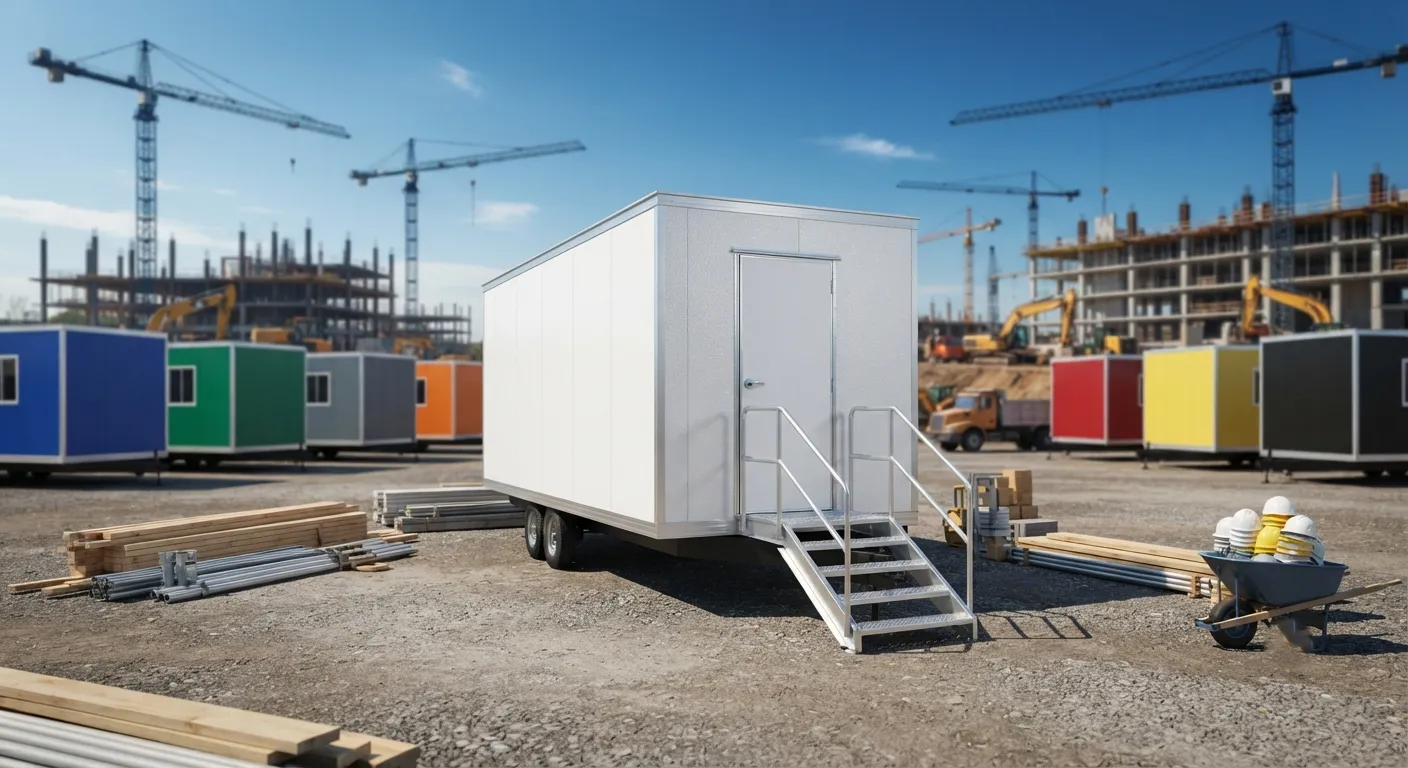
How many units do I need and where do they go on a bigger site?
OSHA 1926.51(c) sets the baseline for construction crews: one toilet facility for 20 workers or fewer, then one seat and one urinal per 40 workers as the crew grows past that, and one per 50 once you hit 200 workers or more. Our how many porta potties do I need guide runs the math for your crew size. On a spread-out site, don't cluster every unit in one corner. Spread them so no worker walks more than a couple minutes to reach one, and place at least one accessible unit where ADA Standards section 213.2 applies, since clustered single-user units require at least 5 percent accessible, never fewer than one. Our ADA accessible porta potty page covers the clearances, including the 36 inch route width in ADA Standards section 403.5.1 and the 60 inch turning circle in section 304.3.1. Farm sites have their own rule: OSHA 1928.110 calls for field sanitation within a quarter mile walk of hand-labor employees, relevant if you're running a crew out past Iowa Park, 14.0 miles northwest, or Burkburnett, 14.7 miles north. Our farm and agricultural restrooms page covers that setup in more detail.

Where should a handwashing station or storage container sit relative to the toilets?
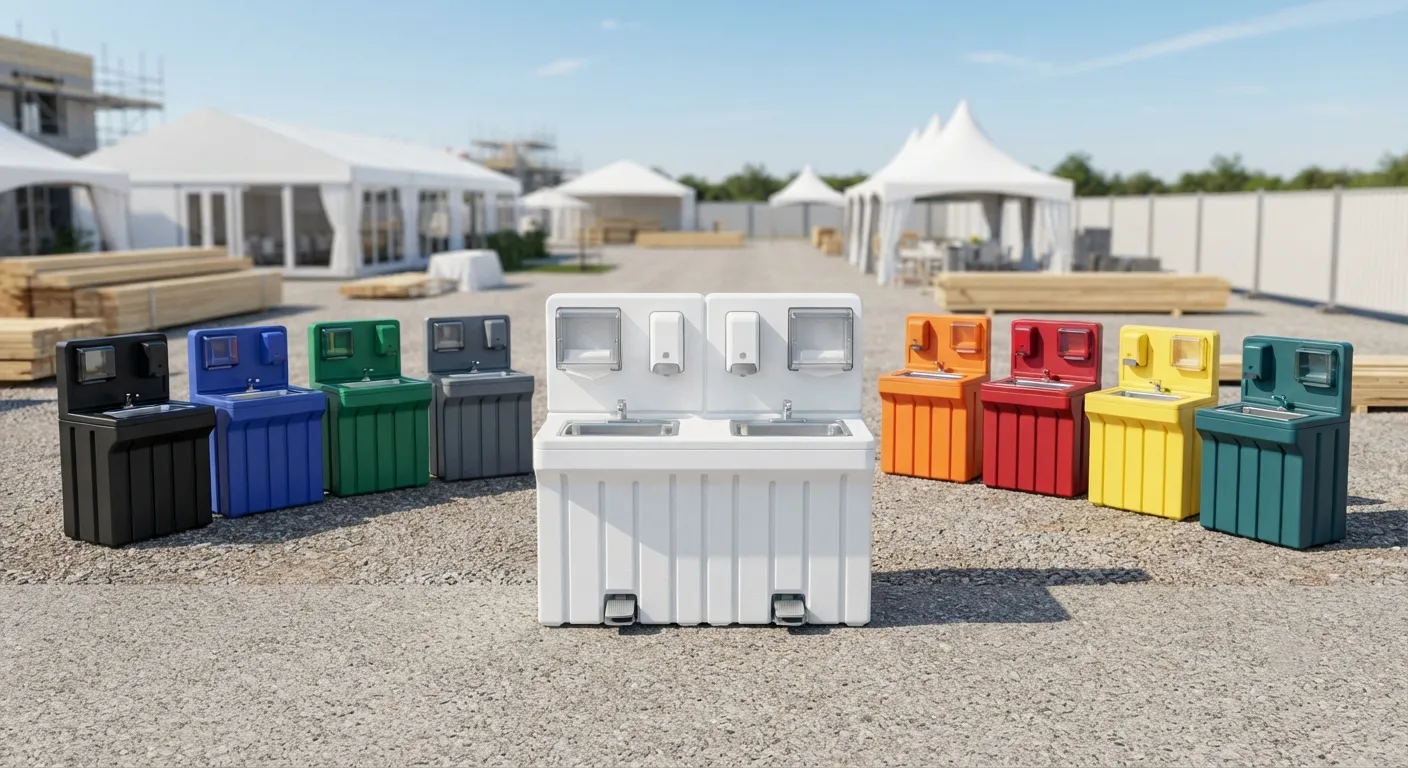
Put the handwashing station within a few steps of the toilets, not across the site, since workers skip the walk if it's inconvenient. 29 CFR 1910.141(d)(2) requires soap and towels or a hand drying device at the station, hand sanitizer alone doesn't satisfy it. If your crew is applying paints, coatings, herbicides, or insecticides, OSHA 1926.51(f)(1) requires washing facilities for that specific work, separate from general sanitation. Our handwashing station rental and handwashing requirements pages cover unit spacing and refill schedules. If you're running an Ozark River portable sink and a replacement part wears out, a pump or spigot for instance, swap it before the unit goes back into rotation rather than letting a crew work around a broken one. Storage containers and mobile office trailers need their own flat pad, ideally near the toilets so workers aren't crossing the whole site between the two. If a mobile office trailer needs replacement doors, budget the downtime, since a trailer sitting open isn't secure. See mobile office trailer rental and storage container rental for pad and clearance specs.
How far from a building does a porta potty need to be placed?
Keep it at least 5 feet from doors, windows, and fresh air intakes, and further if odor control matters to nearby tenants. Firm, level ground within that setback works best. Check our porta potty rental page for delivery specifics.
Can I place a porta potty on grass or gravel?
Yes, both work if the ground is level and drains well. Gravel handles Wichita Falls rain better than grass, which turns soft and uneven. Avoid low spots where water collects after storms.
Does the city require a permit for a porta potty on private property?
Usually not if it's set back from the street, but placement in the public right of way needs confirming with the city first. Call before delivery day to avoid a rescheduled drop. See porta potty permit requirements.
How often does a septic tank near a placed unit need pumping?
A residential septic tank is typically pumped every 3 to 5 years, driven by tank size and household size. That's separate from portable toilet service. See how often to pump a septic tank.
What if my site in Placerville needs septic pumping instead of a porta potty?
This page covers Wichita Falls and nearby towns only; a Placerville septic pumping service falls outside that footprint. For Wichita Falls septic needs, see septic pumping service or emergency septic service.
Next step
Get a delivery date
Tell us the address, the dates and the headcount. We size the order and confirm the route.