
How Do Porta Potties Work?
There's no mystery to it. A standard porta potty rental is a self-contained box: seat on top, tank below, vent stack running up the back to pull odor up and out instead of into the stall. The blue liquid you see isn't just for color. It's a chemical treatment that breaks down solids and cuts down smell between services. When a construction worker running to porta-potty needs relief on a jobsite outside Wichita Falls, that tank is doing all the work with zero water use. That matters on sites without a water line yet. ANSI/PSAI Z4.3, the industry sanitation standard, sets one service visit per week for up to 10 users across a 40 hour week as the baseline interval, though busy sites often need more. If you're staffing a crew and trying to figure out counts, our guide on how many units you need walks through it. OSHA 1926.51(c) also sets ratios for construction sites: one toilet for 20 workers or fewer, scaling up from there. Curious what a rental actually runs? Check porta potty rental cost in Wichita Falls for real numbers.
How Does a Portable Sink Work?
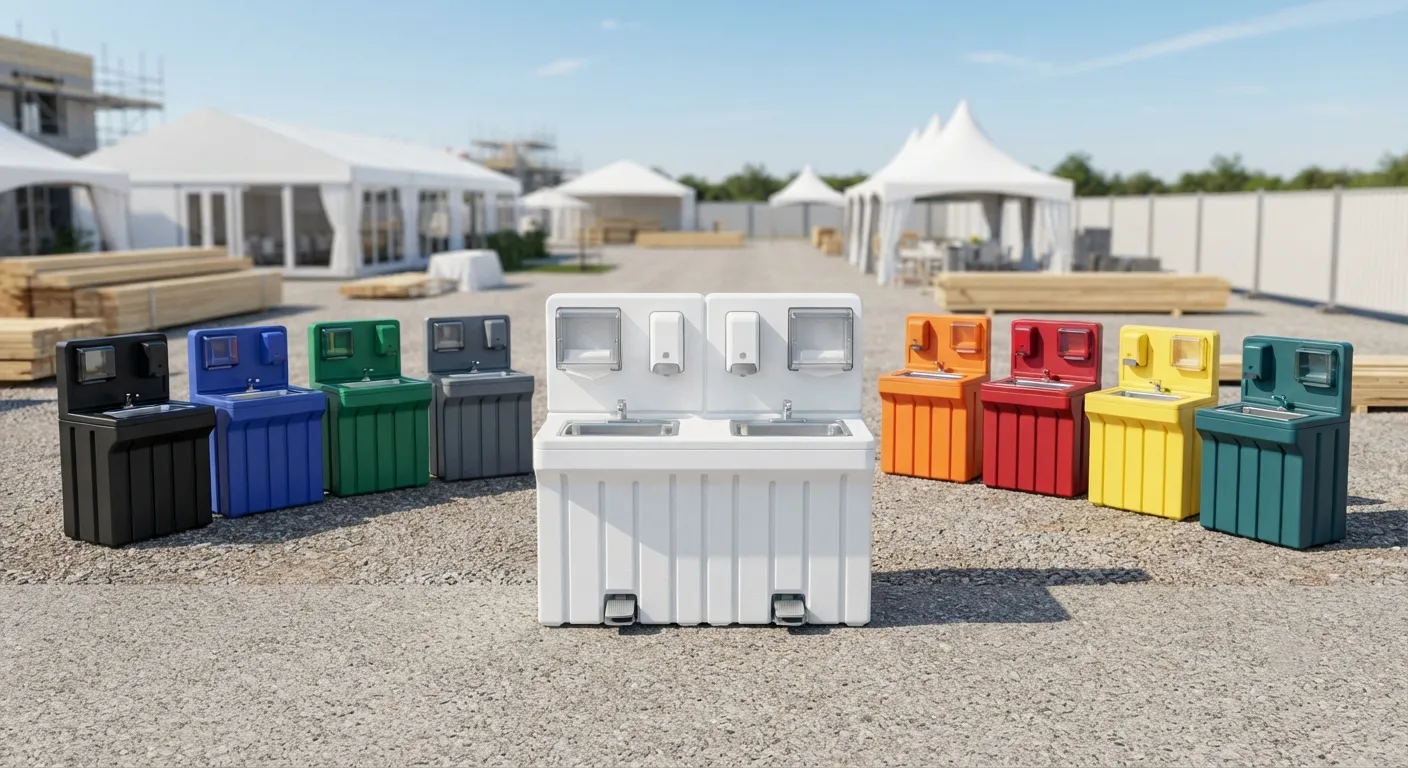
A portable sink runs on a self-contained fresh water tank, a foot pump or hand crank, and a separate gray water tank underneath to catch runoff. No hose bib required. You fill the fresh tank, and pumping the foot pedal or crank pushes water through a spout while a second tank catches what goes down the drain. Most units pair soap dispensers right on the unit. That matters because 29 CFR 1910.141(d)(2) requires soap and towels or a hand-drying device at washing stations; hand sanitizer alone doesn't satisfy it. A handwashing station rental or a dedicated portable sink rental covers that requirement on food service sites, agricultural crews and construction jobs alike. If your crew is working with paints, coatings, herbicides or insecticides, OSHA 1926.51(f)(1) specifically requires washing facilities for that contamination risk, not just general handwashing. Farms around Wichita Falls fall under a related rule too: OSHA 1928.110 requires field sanitation with potable water and handwashing within a quarter mile walk for hand-labor employees. See handwashing requirements for the full breakdown.
How Do Flushable Porta Potties Work?
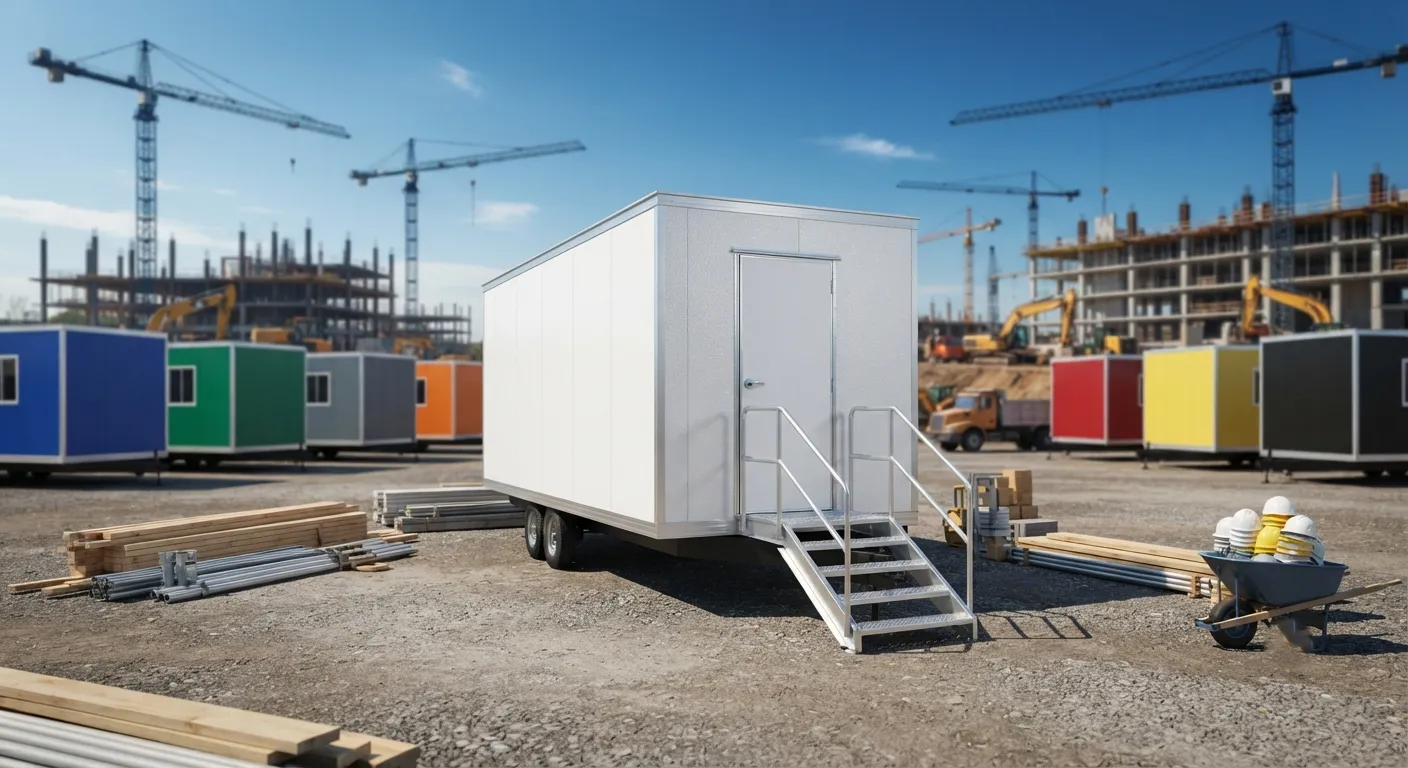
A flushable unit, often called a deluxe model, uses a small onboard flush tank and a hand pump or foot pump to send a splash of water into the bowl after each use, moving waste into the holding tank below just like a standard unit. The difference is comfort, not plumbing complexity: there's still no sewer connection. A deluxe flushable porta potty typically includes a sink, a mirror and better ventilation, which is why they show up at weddings and corporate events around Wichita Falls more than on framing crews. Pricing reflects that upgrade. Weekly deluxe rentals run higher than a standard weekly unit because of the added hardware and more frequent servicing they need. If you're planning a wedding near Lakeside City, 8.1 miles south of Wichita Falls, or an event closer in, the wedding restroom rental and event restroom rental pages cover typical setups. ADA Standards section 213.2 also requires that at least 5 percent of clustered single-user units, and never fewer than one, be wheelchair accessible; our ADA accessible porta potty page details clearance specs, including the 60 inch turning circle required under ADA Standards 304.3.1.

Do Camping Porta Potties Work the Same Way?
Yes, mostly. A camping porta potty setup uses the same sealed-tank principle as a jobsite unit, just usually a smaller footprint for tighter sites. Standard units run about 44 by 48 inches on the ground and stand roughly 92 inches tall, which fits most campground pads without crowding walkways. Wichita Falls sees camping demand near lakes and river access points, and units headed out to Iowa Park, 14.0 miles northwest, or Burkburnett, 14.7 miles north, still need the same 60 feet of straight clearance behind the delivery truck that any roll-off or restroom trailer delivery requires. See camping porta potty for setup details specific to outdoor recreation sites. Chemical treatment matters more here than on a jobsite, since camping units often sit longer between service visits. The right portable toilet chemicals near me question comes up a lot from campground operators, and the honest answer is: whatever your rental company loads standard, since formulations vary by provider and aren't something we'd guess at for you.
What chemical do porta potties use to break down waste?
Providers use a blue deodorizing treatment designed to break down solids and control odor between pump-outs. Exact formulations vary by supplier. It is not the same product used in a home septic tank cleaning chemical routine, since septic systems rely on bacterial balance rather than chemical breakdown.
How often do porta potties get serviced?
ANSI/PSAI Z4.3 sets a baseline of one service visit per week for up to 10 users over 40 hours. High-traffic jobsites or events often need two or three visits weekly. See how often are porta potties cleaned for details.
Do porta potties need a water hookup?
No. Standard and flushable units both run on self-contained tanks, not plumbing lines. That's what makes them useful on raw land near Wichita Falls or Holliday, 13.1 miles southwest, before utilities go in. Only handwashing stations need a fresh water tank refilled periodically.
Can I get a porta potty for a single weekend event?
Yes. Weekend rentals are common for events, and pricing sits between daily and weekly rates. Check porta potty rental per day or request a quote through request a quote for a weekend-specific rate.
How is a porta potty different from a septic tank?
A porta potty holds waste temporarily in a sealed tank for pump-out; a septic tank is a permanent underground system that a household typically pumps every 3 to 5 years. See septic pumping service or septic tank pumping cost for more.
Next step
Get a delivery date
Tell us the address, the dates and the headcount. We size the order and confirm the route.